Emilia Martin | I saw a tree bearing stones instead of apples or pears
December 4, 2025
Emilia Martin takes the fact of the matter ‑burning rocks do sometimes fall from space, and leans into its strangeness. Scientists do the work to explain the phenomenon in intricate detail. But even a satisfying explanation does not temper the great strangeness. Intimacy with something so marvelous, so different from ourselves, needs more space to fully bloom.
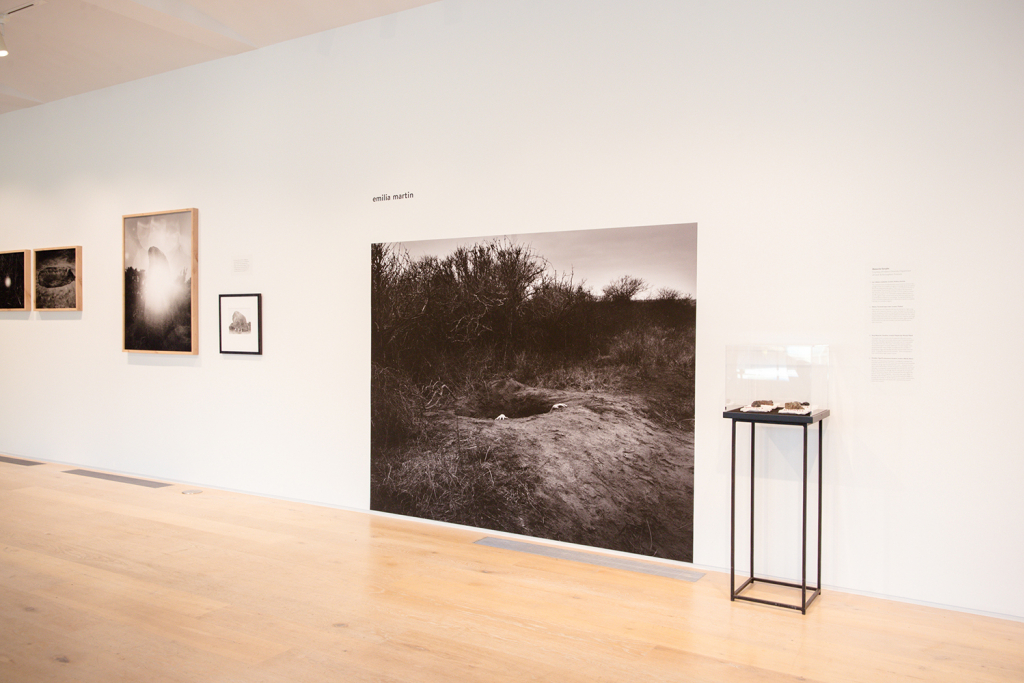
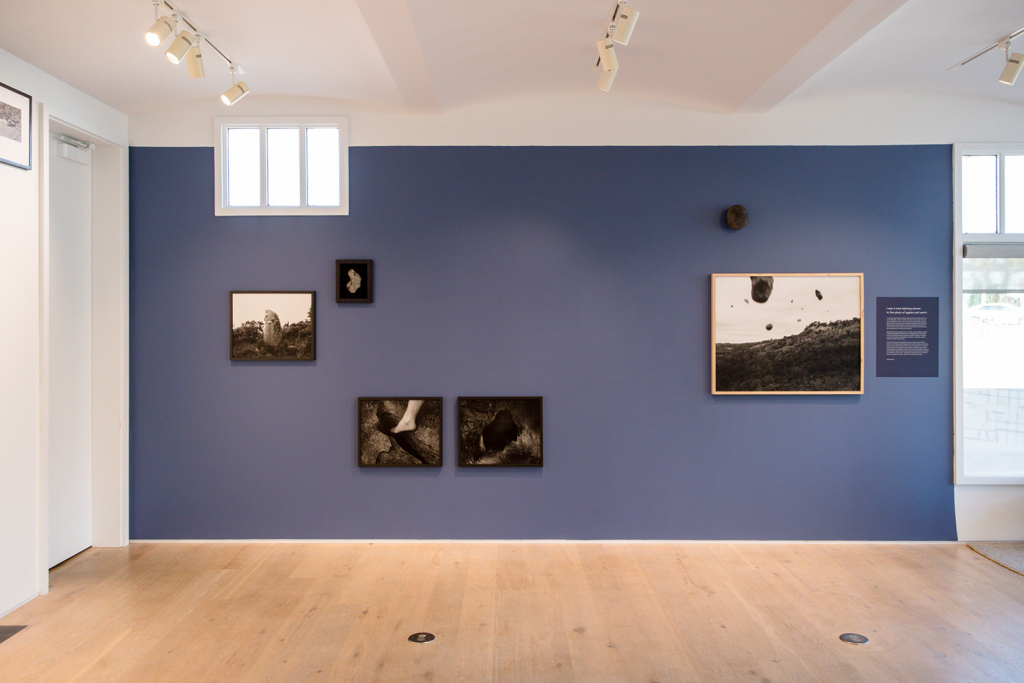
In building this body of work, Martin considers several different perspectives on meteorites, most notably, the point of view of the rocks themselves. She plays with the many ways they could interact with the earth. Acts of falling, hovering, being caught, protected, and cradled, all give a spark of animation to an object we typically consider to be mute and immobile.
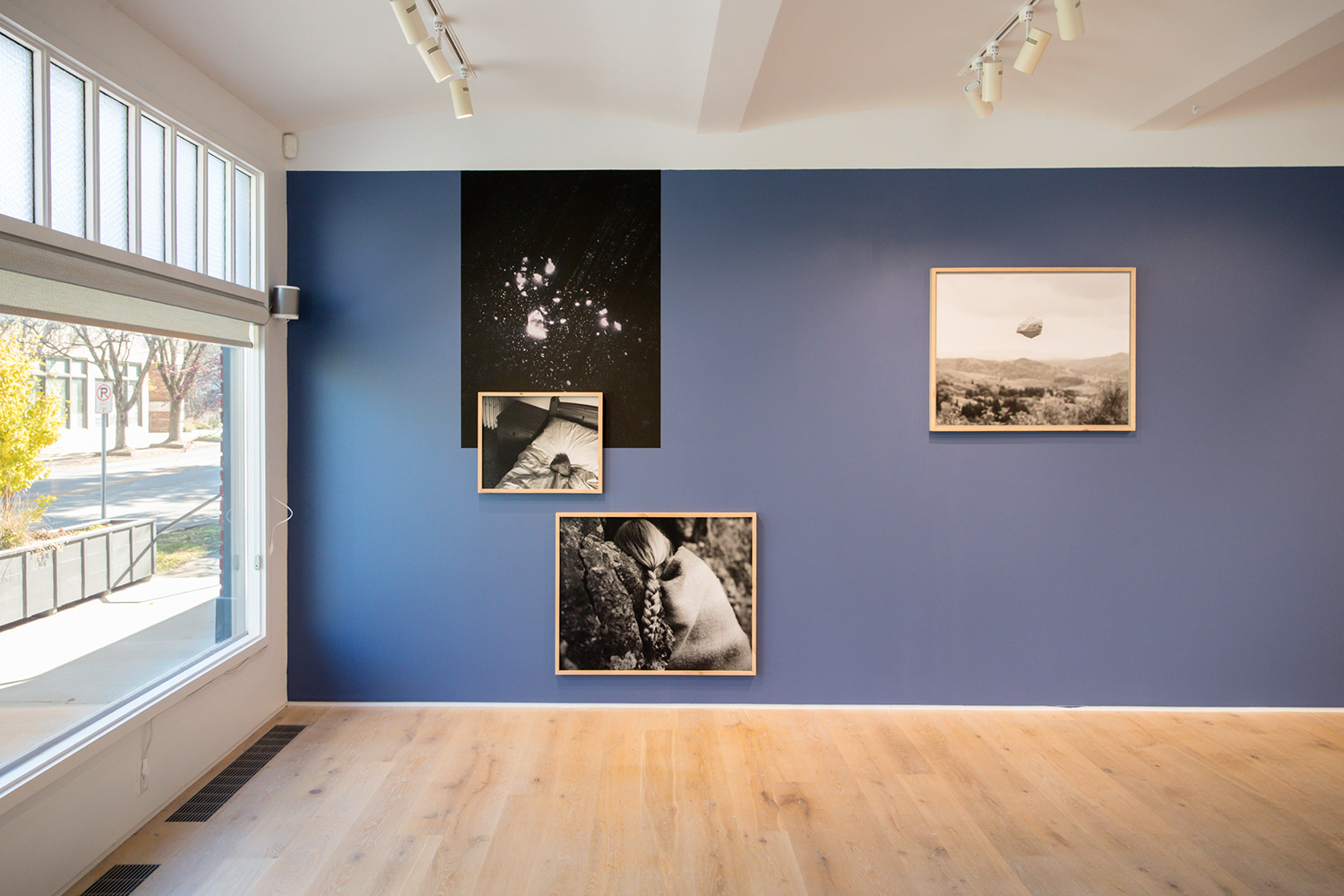
In an attempt to get closer, Martin places the human body against a rockface, allowing its perspective to be heard and absorbed. Mixing soft flesh with hard stone is a bit like trying to mix oil and water. It is an unlikely communion, but Martin is a natural mediator. The artist seems to sleep and dream on the rough surface, her braid draped softly on the ledge like it’s a pillow. Another image shows a stone about the height of a person, with a circular hole in its center. One human arm protrudes through and the other wraps around, so that the rock is fully embraced.

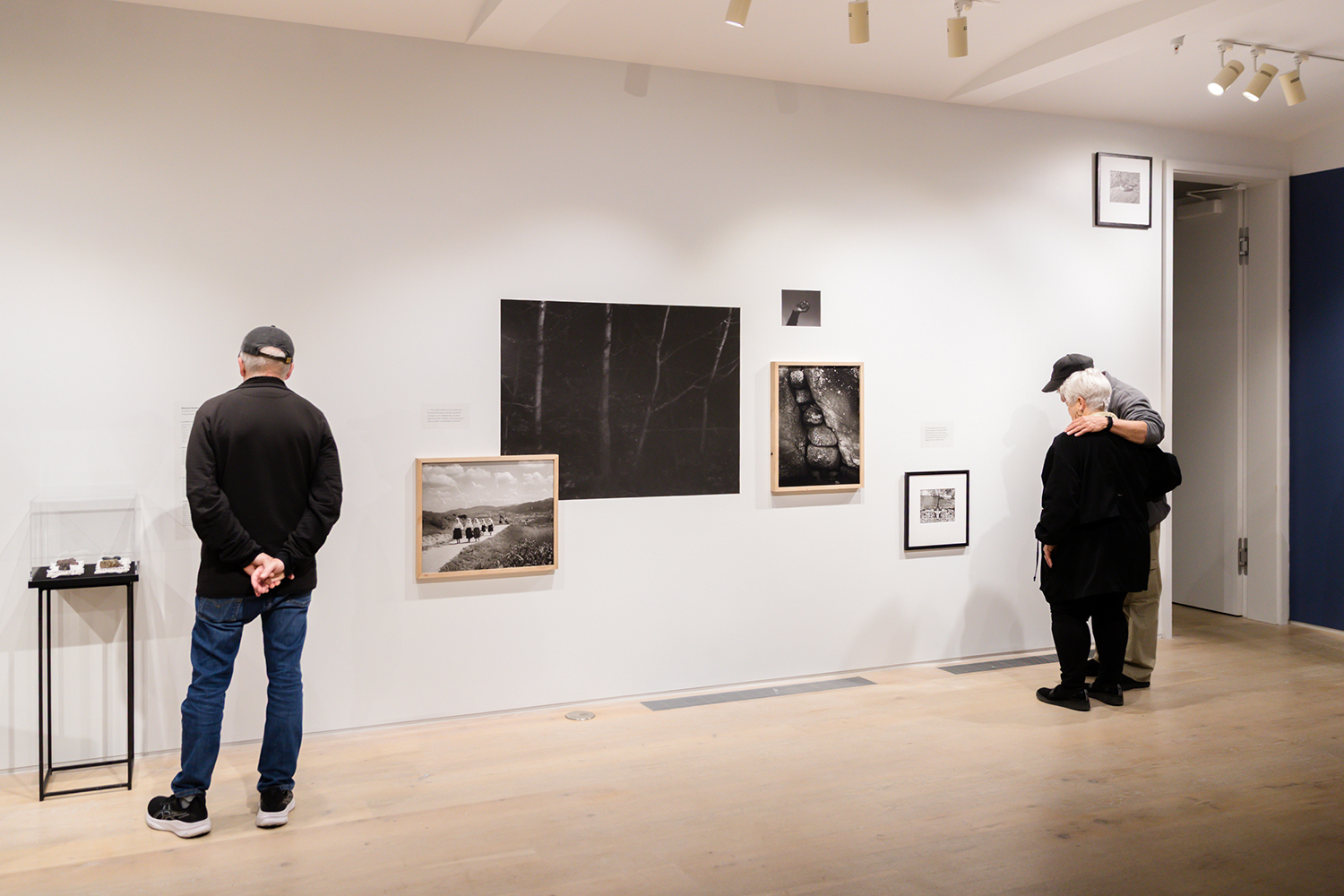
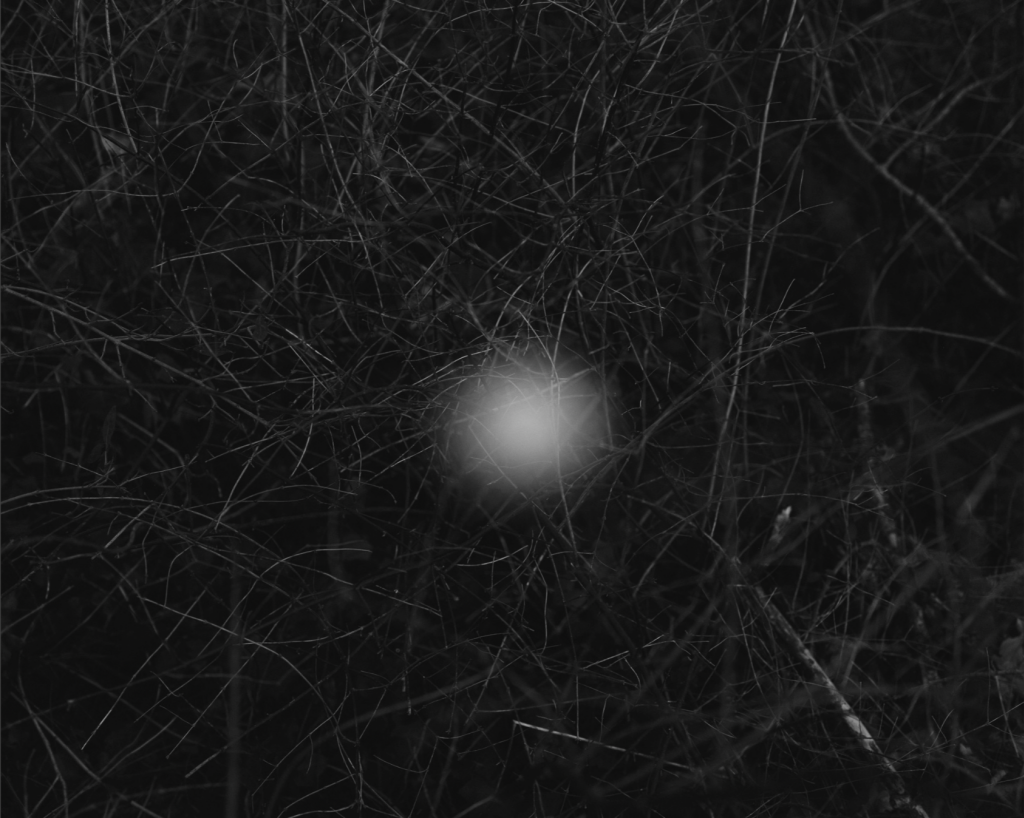
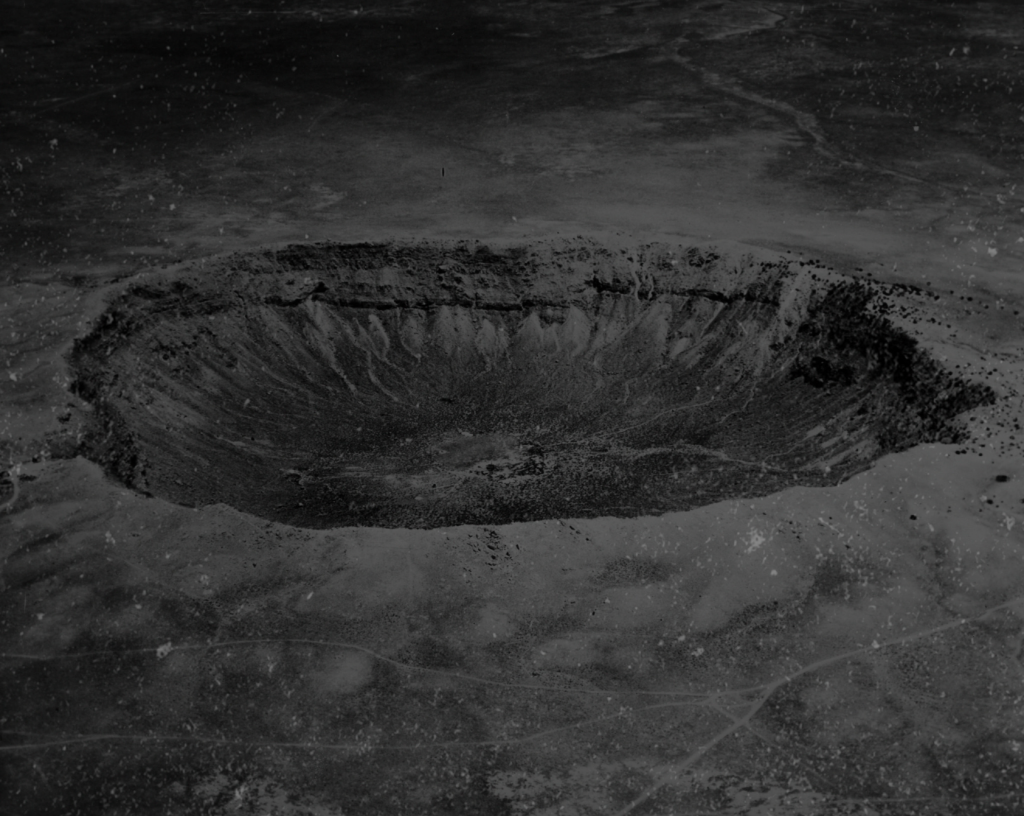
With poetic imagination, Martin creates an enchanting landscape for the meteorites’ journey. In the world on the walls, peasant women emerge from a dark forest. An orb of light hovers in a thicket, with an empty crater nearby. We begin to see the life and migration of the extraterrestrial visitors. The photographs are printed on the darker end of the tonal range, so that when light appears, it’s glowing. Large swaths of open darkness are not to be feared; there is delicacy to be found in the shadows.

Early accounts of meteorites were dismissed as superstition, as if believing in the rocks was like believing in magic. But why shouldn’t they be magic? Even if and when completely explained, are they not still a bit miraculous? In this work, there is a playful yet intentional comingling of truth and tales, with a reminder that not all tales are untrue. There is tenderness in Martin’s approach that comes from the act of careful listening- she is listening to the old tales told in small towns, she is listening to scientists, she even listens to the rocks themselves.
- Lisa Woodward + Mia Dalglish
See more of Emilia’s work HERE